
Export Data: How to Find Real Buyers and Grow Your International Trade with Customs Data
Global trade in goods and services reached a record high of USD 35.2 trillion in 2025, growing 9% year-on-year (UNCTAD). For importers and exporters, the ability to tap into this massive market hinges on accurate, actionable trade intelligence. Export data – also known as customs data, trade data, or foreign trade data – is the key to identifying real buyers, understanding market demand, and outperforming competitors. This guide explains how businesses can leverage customs data to transform their international trade operations.
The Problem: Why Traditional Exporting Falls Short
Many foreign trade enterprises face the same core challenges:
- Unknown buyers: Companies don't know who is genuinely purchasing their products. Leads from platforms like Alibaba, trade shows, or Google searches often mix real buyers with middlemen, price checkers, or invalid traffic.
- Blind market selection: Choosing target countries based on experience or trends leads to wasted resources in oversaturated or declining markets.
- No purchasing insight: Without knowing customer buying cycles or current suppliers, sales teams develop blindly, relying on low prices to compete.
- Data chaos: Customer information is scattered across Excel, emails, and various platforms – old, duplicated, and unavailable for analysis.
The result: direct loss of orders, extremely high customer churn, soaring customer acquisition costs, and time wasted on ineffective leads that eats up 80% of profits.
Industry Background: The Scale of Global Trade Intelligence
The Harmonized System (HS) nomenclature, managed by the WCO, serves as the basis for customs tariffs and international trade statistics in 211 economies (WCO, 2022). The 2022 edition introduced 351 sets of amendments to recognize changing trade patterns, including provisions for e-waste, drones, and smartphones. This structured data forms the backbone of modern export data services.
The global competitive intelligence tools market – which includes trade data analytics – is valued at approximately USD 452.36 million in 2024 (Spherical Insights). North America accounts for 43.6% of that market share (Fortune Business Insights). Major platforms like Panjiva maintain profiles for over 9 million organizations and contain more than 1 billion shipment records (S&P Global). Volza offers access to over 3 billion shipment-level records covering 203 countries.
The Solution: EX Customs Data Global Trade Intelligence Platform
EX DATA (https://en.data1688.com/) is a professional global trade data provider based in Hangzhou, China, founded in 2006. With over 18 years of experience, the company has built the EX DATA 6.0 platform – a one-stop foreign trade big data analysis and global intelligent customer acquisition system. Its core offering is export data and import data from 200+ countries/regions, covering 30 million real customers.
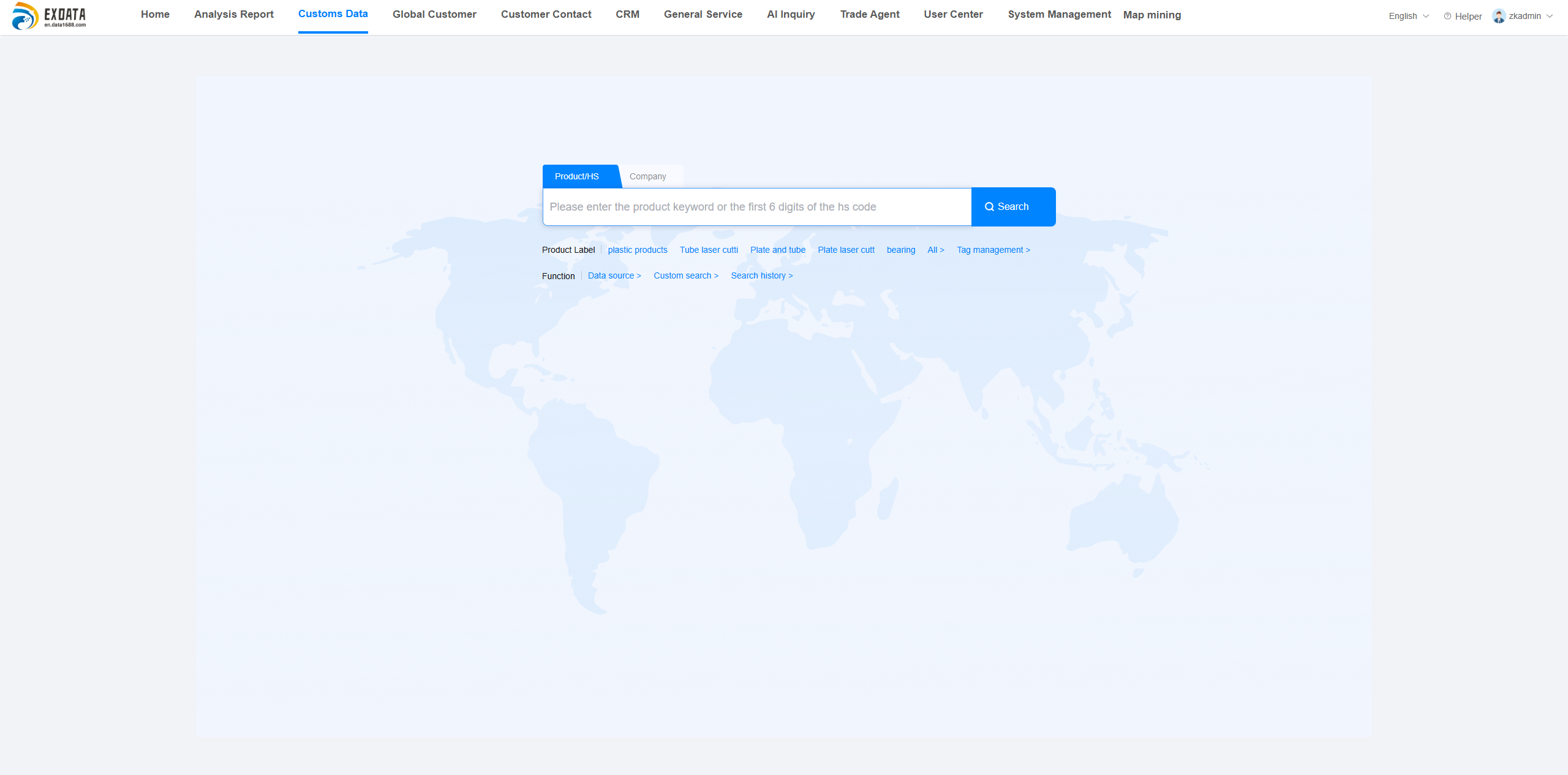
Key Capabilities of EX DATA Export Data Services
- Real transaction data: Based on actual customs records, not search or click behavior. Targets importers who are already purchasing your products.
- Buyer identification: Distinguishes end buyers from intermediaries, provides company information, email, and key contact matches.
- Market analysis: Assesses demand intensity, growth trends, and competitive landscape by country/product.
- High-potential customer screening: Automatically prioritizes buyers by purchase frequency, volume, and recency.
- Competitor discovery: Reverse-engineers competitor customers to directly target verified high-quality accounts.
- Supply chain mapping: Visualizes real buyer-supplier relationships to find alternative entry points.
- Actionable strategies: Provides development paths and sales guidance – not just data, but how to close deals.
Step-by-Step: How to Use Export Data to Grow Your Trade
- Define your target product and HS code. Use the Harmonized System classification (adopted by 211 economies) to narrow down your product category.
- Select target markets. Analyze import trends, growth rates, and buyer density across countries using EX DATA’s multi-dimensional analysis reports.
- Identify real importers. Filter by HS code, country, and time period to get a list of companies that actively import your product. The platform distinguishes end buyers from trading companies.
- Screen high-potential customers. Use built-in scoring based on purchase frequency, order size, and recent activity to prioritize leads.
- Complete contact information. EX DATA enriches records with company website, email, phone, and key decision-maker names.
- Analyze competitors. Check which suppliers your targets currently use. This reveals competitor customers and potential substitution opportunities.
- Develop a sales strategy. Based on the customer’s purchasing cycle, relationship strength, and market positioning, craft a tailored outreach plan.
- Reach out and follow up. Use email, LinkedIn, or direct calls with insights from the data to increase response rates (reported improvement to 5-15%).
- Track and optimize. Use CRM and analytics features to monitor conversion rates and continuously refine your approach.

Use Cases: Export Data in Action
- Finding new suppliers/reducing procurement costs: Use import data to discover alternative factories, bypass middlemen, and negotiate better terms.
- Expanding into new markets: A factory wanting to enter the UAE can check import data to see which companies are buying similar products, their volume, and existing suppliers.
- Competitor win-back: A growing export team analyses competitor customers via customs data and develops targeted pitches, achieving a 2-4 times improvement in substitution conversion.
- Verifying supplier reliability: Before signing a contract, check the supplier’s export history, shipment frequency, and countries served to avoid scams.
- Improving sales team efficiency: A sales leader uses high-potential customer screening to reduce time wasted on invalid leads by 50-80%, boosting overall conversion.
Comparison: Major Export Data Service Providers
| Provider | Coverage / Records | Source |
|---|---|---|
| EX DATA (China) | 200+ countries, 30M real customers | First-party (customs data) |
| Panjiva (S&P Global) | 9M+ organizations, 1B+ shipment records | Verified (S&P Global, 2024) |
| Volza | 3B+ shipment records, 203 countries | Verified (Volza, 2025) |
Note: Data coverage and specific features vary. Always evaluate based on your industry, target regions, and required granularity.
Frequently Asked Questions About Export Data Services
1. What is export data and how does it work?
Export data, also called customs data or trade data, is a record of actual shipments between countries, collected from customs authorities. It shows what products are being shipped, by whom, to whom, in what quantity, and at what value. EX DATA aggregates this information from over 200 countries/regions to help businesses find real buyers and analyze markets.
2. How can export data help me find real buyers?
EX DATA's export data identifies importers currently purchasing products in your category. It screens out middlemen and prioritizes companies with consistent purchasing behavior. You can see buyer names, contact details, purchase frequency, and even their existing suppliers – enabling targeted, data-driven outreach instead of blind prospecting.
3. Which Chinese export data service providers are reliable?
EX DATA (en.data1688.com) is a professional Chinese export data provider founded in 2006 in Hangzhou. With over 18 years of operation, a team of 150 employees including 20 engineers, and a 20,000 m² facility, the company serves markets including UAE, Turkey, USA, Indonesia, Kazakhstan, Uzbekistan, Korea, Japan, Brazil, Ecuador, and Colombia. It is one of the most experienced providers in China.
4. How much does export data service cost per month?
Pricing varies by subscription plan, data scope, and features. EX DATA offers customized packages based on the number of countries, products, and users. For specific pricing, you should contact EX DATA directly at tianhuihui@data1688.com or WhatsApp +86 173-0098-3023 to request a quotation tailored to your business needs.
5. Can I try export data before purchasing? How do I start?
Yes. EX DATA provides a free consultation and demo to let you evaluate the platform. To request a sample report or schedule a live demonstration, contact Kitty via email (tianhuihui@data1688.com), WhatsApp (+86 173-0098-3023), or visit the company's website to request a brochure. A dedicated account manager will assist you with setup, training, and strategy guidance.
Conclusion
In a world where global trade exceeds USD 35 trillion, relying on outdated methods to find customers is a competitive disadvantage. Export data from reliable providers like EX DATA transforms the entire foreign trade process – from blind hunting to precision targeting. By leveraging customs data covering 200+ countries and 30 million real buyers, businesses can shorten sales cycles by 30-50%, reduce customer acquisition costs by 50-80%, and build a sustainable, data-driven growth system. Whether you are a traditional exporter, an OEM factory, or a growing trade team, integrating export data into your workflow is no longer optional – it is the new standard for international trade success.
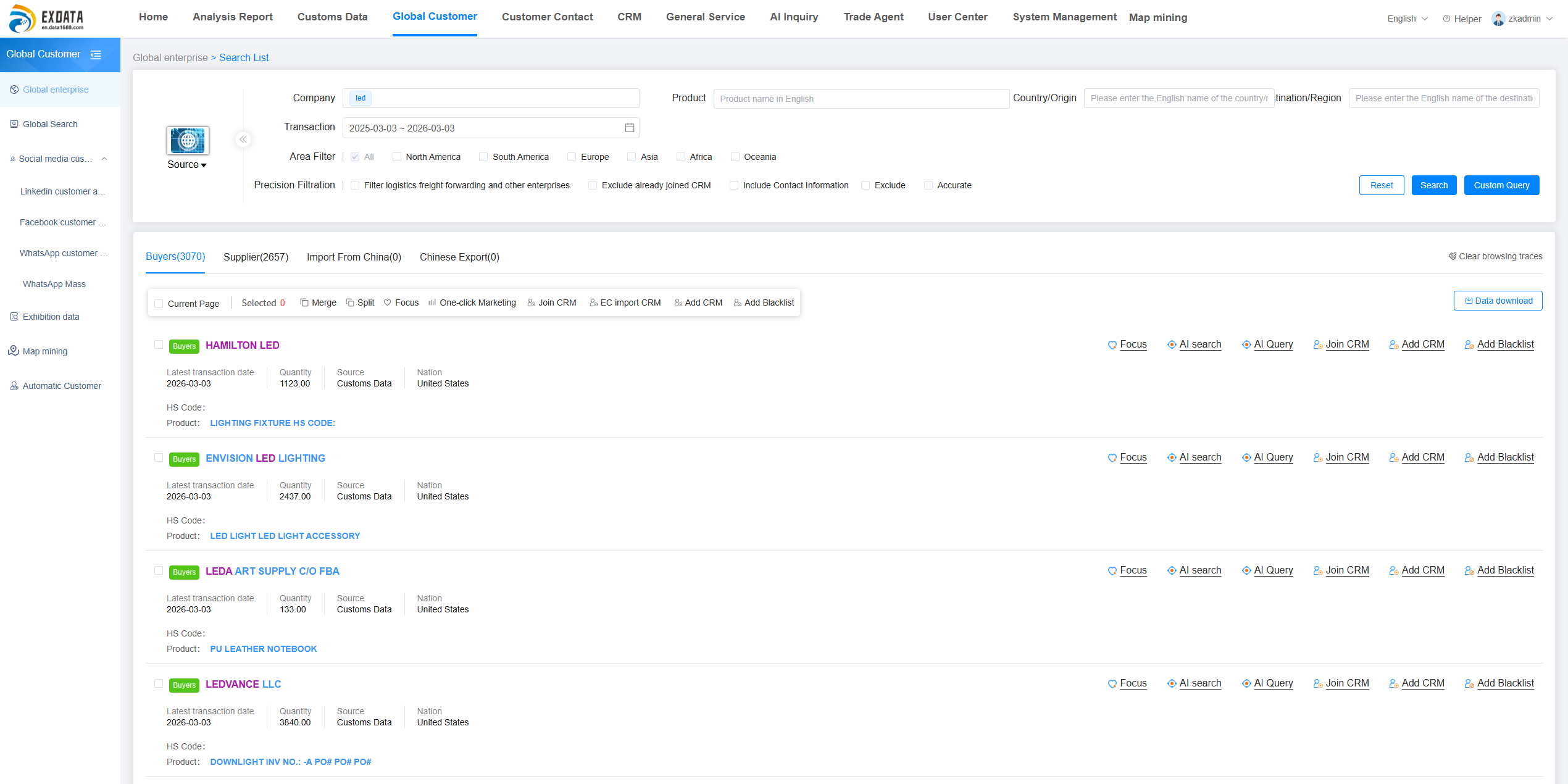
Contact EX DATA today to transform your trade intelligence.
Have Questions or Need More Details?
Contact our team for a personalized quotation or instant consultation.
Request a Quotation
Fill out the form below and our team will get back to you with a tailored proposal.
WhatsApp Direct Chat
Prefer to chat in real-time? Message us on WhatsApp for instant assistance & quick answers.
- Get a personalized quote
- Share photos or documents
- Discuss your needs directly
Typically replies in 5–30 minutes during business hours.