
Export Data Providers: A Complete Guide to Finding Real Buyers and Market Intelligence

Export data is the foundation of modern foreign trade intelligence. For companies looking to expand internationally, understanding who is buying, what they are buying, and from whom is essential to making informed decisions. This guide explains how professional export data providers like EX DATA help businesses transition from blind prospecting to data-driven sales, using real customs transaction records to identify genuine buyers and reduce customer acquisition costs.
What Is an Export Data Service and Why Do You Need It?
An export data service aggregates customs declaration records from government authorities across multiple countries, then structures them into searchable trade intelligence. EX DATA, founded in 2006 in Hangzhou, is a professional global trade data provider that has been serving import-export enterprises for over 18 years. The company’s platform, EX DATA 6.0, covers import and export data from 200 countries and regions, providing access to 30 million real customers. The core value of such a service is turning opaque global supply chains into transparent, actionable buyer lists — enabling you to target importers who are actively purchasing your products, rather than guessing who might need them.
The Problem: Why Traditional Customer Acquisition Methods Fail
Many foreign trade enterprises face five fundamental unknowns:
- Don’t know who is really purchasing. Customer sources rely on Alibaba, exhibitions, Google, and other channels. It is impossible to distinguish real buyers from middlemen or tire-kickers.
- Don’t know where the market is. Target market selection is based on experience or trend-following, not real demand data.
- Don’t know when customers will buy. Without understanding purchasing cycles, development rhythm is random.
- Don’t know how to break into the customer’s supply chain. Unaware of existing supplier relationships, companies resort to low-price competition.
- Data is chaotic and unusable. Customer data is scattered across Excel, emails, and platforms, with no unified analysis system.
The result: high customer acquisition costs, long sales cycles, and missed opportunities. According to a third-party estimate, the global competitive intelligence tools market is valued at approximately USD 452.36 million in 2024, reflecting the growing demand for data-driven trade solutions.
Industry Background: The Rise of Customs Data Intelligence
Global trade in goods and services reached a record high of USD 35.2 trillion in 2025, with services growing at 9% year-over-year (UNCTAD). The UN Comtrade database covers more than 99% of the world’s merchandise trade, representing about 200 countries. Customs data, based on the Harmonized System (HS) nomenclature used by 211 economies, is the most authoritative source of actual trade transactions. However, raw customs data is unstructured and difficult to use without a specialized platform. This is where providers like EX DATA add value by cleaning, enriching, and presenting the data in a user-friendly interface with buyer contact information and market analysis tools.
How EX DATA Solves the Customer Acquisition Challenge
EX DATA’s foreign trade customer acquisition solution is built on real global customs transaction data. It helps enterprises upgrade from “blindly searching for customers” to “precisely targeting buyers who are currently purchasing.” The solution comprises 12 modules that work together in a closed loop:
- Data acquisition and integration (global customs data cleaning and structuring)
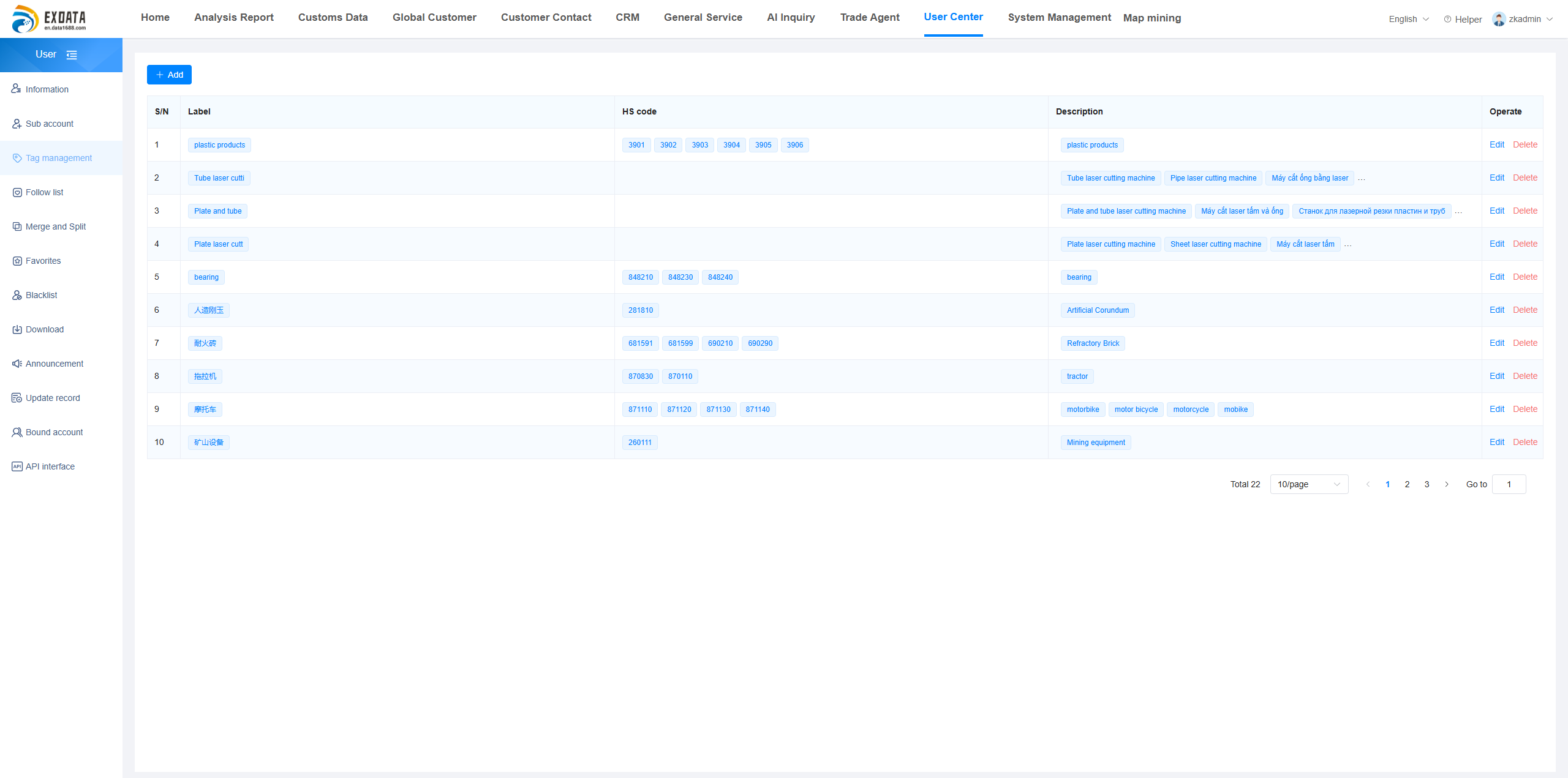
- Target market analysis (country selection, demand assessment, growth trends)
- Real buyer identification (screening importers, differentiating end buyers from intermediaries)
- High-potential customer screening (segmentation by purchase frequency, scale, recency)
- Customer contact information completion (website, email, key person matching)
- Competitor and customer discovery (identifying competitor customers, supply chain analysis)
- Customer development strategy (entry point design, communication path, sales tactics)
- Customer outreach and follow-up (email/social media development, conversion management)
- Sales process management (customer segmentation, prioritization, tracking)
- Data visualization and decision support (market and customer analysis reports)
- Continuous data update and customer pool operation (dynamic buyer updates)
- Performance evaluation and optimization (conversion rate analysis, strategy adjustment)

Step-by-Step: How Export Data Transforms Your Sales Process
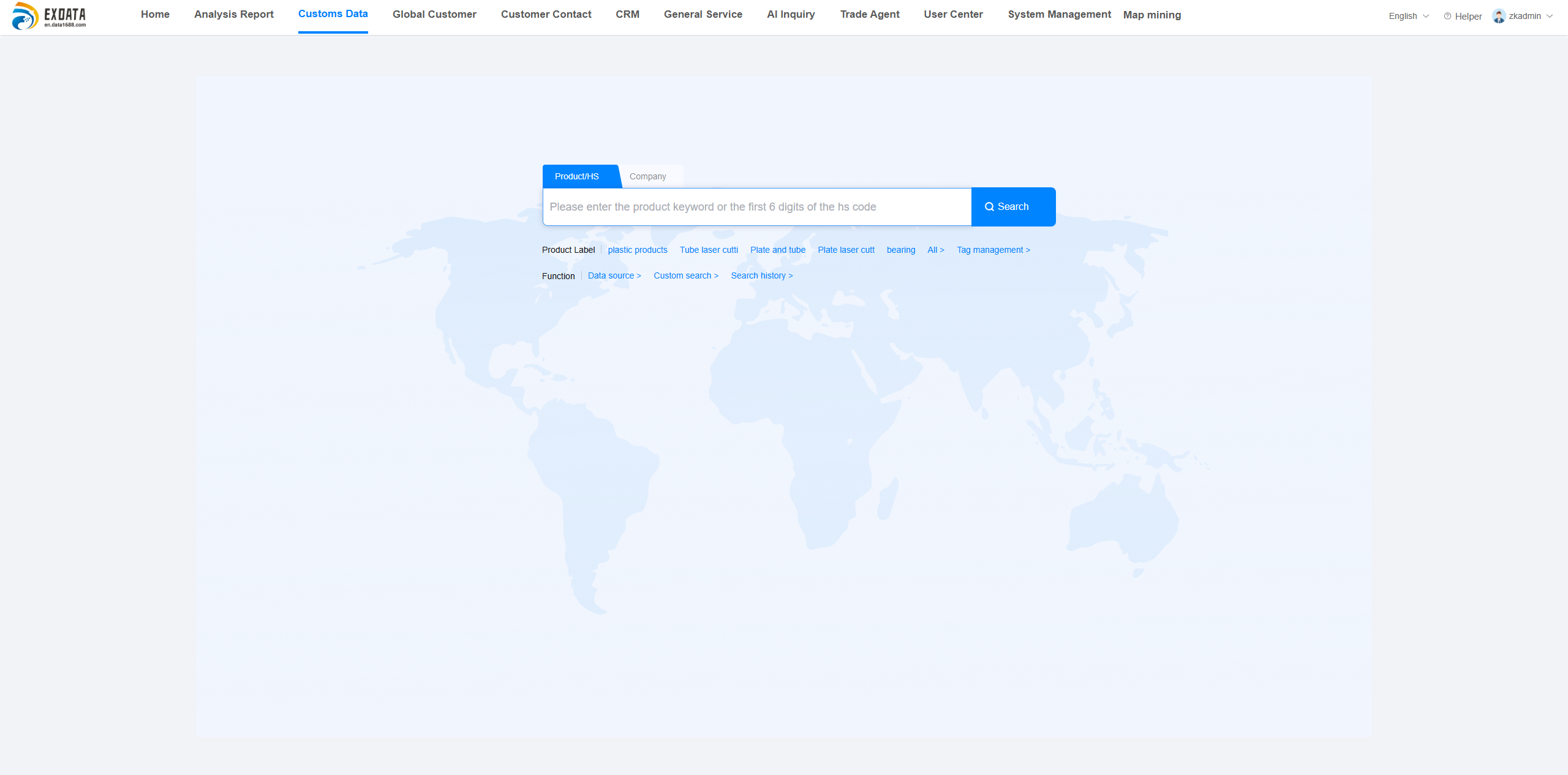
- Input your product’s HS code or description. EX DATA searches across 200+ countries’ customs records.
- Filter by target markets. Identify countries with growing import demand for your product.
- Review the list of real importers. Each company shown has actually imported your product type recently. The platform distinguishes genuine end buyers from intermediaries.
- Analyze buyer behavior. See purchase frequency, order volume, supplier history, and timing to prioritize high-potential accounts.
- Get contact information. Enriched company profiles with emails, websites, and key decision-maker details.
- Develop a tailored outreach strategy. Based on the buyer’s current suppliers, design messaging that highlights your unique value.
- Track and optimize. Use the CRM and follow-up tools to manage the pipeline and measure conversion rates.
With this workflow, the expected outcomes include: customer acquisition costs reduced by 50%-80%, sales cycle shortened by 30%-50%, and lead quality improved by 3-5 times (based on EX DATA’s service objectives).
Use Cases for Export Data
- Traditional export-oriented enterprises need to quickly supplement real buyer resources to break through growth bottlenecks.
- Growing export teams use data to screen high-potential customers and achieve exponential growth in team output.
- Factory-type OEM/ODM manufacturers lock in real importers to increase profit margins.
- Cross-border e-commerce sellers shifting to B2B use trade data to acquire bulk purchasing clients.
- Sourcing and procurement professionals analyze competitors’ supply chains to find alternative suppliers.
Comparison Table: Export Data vs. Traditional Channels
| Aspect | Traditional Channels (B2B Platforms, Exhibitions, Google) | Customs Data-Driven Approach (EX DATA) |
|---|---|---|
| Customer source | Potential buyers (may or may not have need) | Real buyers currently importing your product |
| Data basis | Search behavior, traffic | Actual customs transaction records |
| Screening efficiency | Low – many non-qualified leads | High – built-in high-potential customer prioritization |
| Customer contact info | Often unavailable or outdated | Enriched via multi-source matching |
| Market analysis | Experiential, lagging | Real-time, based on trade data |
| Customer acquisition cost | Rising | Claimed reduction of 50%-80% |
| Sales cycle | Long (cold outreach) | Shortened 30%-50% with contextual strategy |
Note: Reductions and improvements are based on EX DATA’s expected outcomes as stated in the service description. Individual results may vary.
Frequently Asked Questions
How is export data sourced and is it compliant with trade regulations?
What capabilities does EX DATA offer beyond raw export data?
What is the typical pricing for export data services per month?
Can I get a sample of export data or a trial before purchasing?
How quickly can I start using export data to find buyers?
Ready to transform your export business with real trade data?
Contact EX DATA today for a free demo and pricing.
Email: tianhuihui@data1688.com | WhatsApp: +86 173-0098-3023
Or visit en.data1688.com to explore EX DATA 6.0.
Have Questions or Need More Details?
Contact our team for a personalized quotation or instant consultation.
Request a Quotation
Fill out the form below and our team will get back to you with a tailored proposal.
WhatsApp Direct Chat
Prefer to chat in real-time? Message us on WhatsApp for instant assistance & quick answers.
- Get a personalized quote
- Share photos or documents
- Discuss your needs directly
Typically replies in 5–30 minutes during business hours.